Infectious Disease Ecology Across Scales Lab
where Wisdom Begins in Wonder

who we are
We use insect vectors as windows into the interconnected worlds of ecology, disease, equity, and health.
Our work bridges ecology, entomology, and public health through a One Health lens, combining field research, emerging technologies, and community collaboration to fill critical gaps in how vector-borne diseases are understood and managed. We focus on overlooked systems, where limited data and awareness leave communities vulnerable. Along the way, we train scientists to lead with curiosity and critical thinking, building a research culture grounded in rigor, creativity, and care.
how we see the world
We lead with wonder to ask better questions and uncover deeper truths.
In the IDEAS Lab, science is both a rigorous discipline and a creative practice. We make space to think deeply about why our questions matter, pushing beyond established dogmas to build research that is conceptually grounded and exploratory. By slowing down, challenging assumptions, and staying open to discovery, we create the conditions for insights that traditional approaches often miss.

research feature
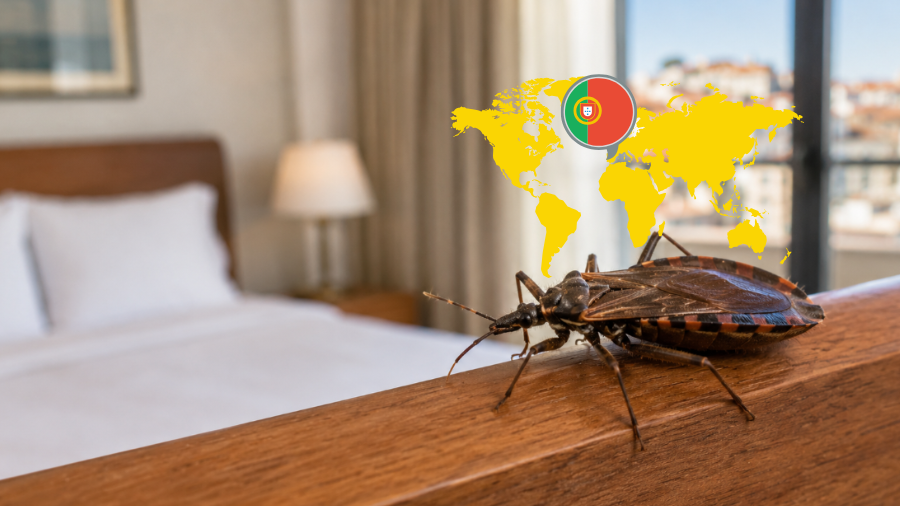
We track disease vectors to reveal how transmission actually works in the real world.
Using tools like harmonic radar and population genetics, we follow the movement, feeding patterns, and infection status of insects across space and time.
This allows us to map where vectors live, how they interact with humans and wildlife, and when transmission risk is highest. By uncovering these dynamics in real-world settings, we generate the data needed to inform more effective, targeted public health strategies.
Latest Discoveries
Our work has been featured in



Why this work matters
Understanding disease means understanding the world—and the stakes have never been higher.
Vector-borne diseases are shifting with climate change, environmental disruption, and global inequities, often in ways we still don’t fully understand. By uncovering how these systems work, we generate knowledge that can protect communities, inform policy, and anticipate emerging risks. Join us in building a deeper, more connected understanding of health!